Franklin and the Fox

Search for the Northwest Passage, a Discovery Channel documentary

Posted in Video | Comments Off on Franklin and the Fox

Diary entries

Diary page, Ernest Shackleton

Diary page, Ernest Shackleton

“Everyone is keeping a diary now. There was so little incident from day to day in the ship that very few of us thought it worthwhile.”

— Thomas Orde-Lees

Diary page, Ernest Shackleton

Diary page, Ernest Shackleton


[images from SPRI]

Posted in Images, Other Voices, Shackleton | Comments Off on Diary entries

All this becomes your Mode of Life

eothen

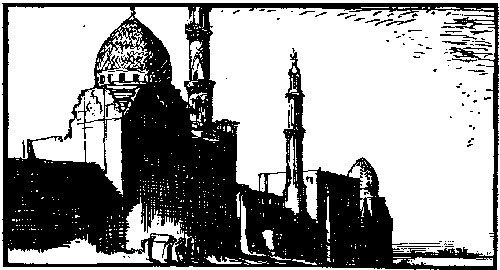
“The first night of your first campaign (though you be but a mere peaceful campaigner) is a glorious time in your life. It is so sweet to find one’s self free from the stale civilisation of Europe! Oh my dear ally, when first you spread your carpet in the midst of these Eastern scenes, do think for a moment of those your fellow-creatures, that dwell in squares, and streets, and even (for such is the fate of many!) in actual country houses; think of the people that are “presenting their compliments,” and “requesting the honour,” and “much regretting,”—of those that are pinioned at dinner-tables; or stuck up in ballrooms, or cruelly planted in pews—ay, think of these, and so remembering how many poor devils are living in a state of utter respectability, you will glory the more in your own delightful escape.

“I am bound to confess, however, that with all its charms a mud floor (like a mercenary match) does certainly promote early rising. Long before daybreak we were up, and had breakfasted; after this there was nearly a whole tedious hour to endure whilst the horses were laden by torch-light; but this had an end, and at last we went on once more. Cloaked, and sombre, at first we made our sullen way through the darkness, with scarcely one barter of words, but soon the genial morn burst down from heaven, and stirred the blood so gladly through our veins, that the very Suridgees, with all their troubles, could now look up for an instant, and almost seem to believe in the temporary goodness of God.

“The actual movement from one place to another, in Europeanised countries, is a process so temporary—it occupies, I mean, so small a proportion of the traveller’s entire time—that his mind remains unsettled, so long as the wheels are going; he may be alive enough to external objects of interest, and to the crowding ideas which are often invited by the excitement of a changing scene, but he is still conscious of being in a provisional state, and his mind is constantly recurring to the expected end of his journey; his ordinary ways of thought have been interrupted, and before any new mental habits can be formed he is quietly fixed in his hotel. It will be otherwise with you when you journey in the East. Day after day, perhaps week after week and month after month, your foot is in the stirrup. To taste the cold breath of the earliest morn, and to lead, or follow, your bright cavalcade till sunset through forests and mountain passes, through valleys and desolate plains, all this becomes your MODE OF LIFE, and you ride, eat, drink, and curse the mosquitoes as systematically as your friends in England eat, drink, and sleep. If you are wise, you will not look upon the long period of time thus occupied in actual movement as the mere gulf dividing you from the end of your journey, but rather as one of those rare and plastic seasons of your life from which, perhaps, in after times you may love to date the moulding of your character—that is, your very identity. Once feel this, and you will soon grow happy and contented in your saddle-home. As for me and my comrade, however, in this part of our journey we often forgot Stamboul, forgot all the Ottoman Empire, and only remembered old times. We went back, loitering on the banks of Thames—not grim old Thames of ‘after life,’ that washes the Parliament Houses, and drowns despairing girls—but Thames, the ‘old Eton fellow,’ that wrestled with us in our boyhood till he taught us to be stronger than he. We bullied Keate, and scoffed at Larrey Miller, and Okes; we rode along loudly laughing, and talked to the grave Servian forest as though it were the ‘Brocas clump.'”

— excerpt from Eothen, or, Traces of Travel Brought Home from the East, by A. W. Kinglake: online text.

Posted in Images, Other Voices | Comments Off on All this becomes your Mode of Life

“Epidemic proportions”

cards2

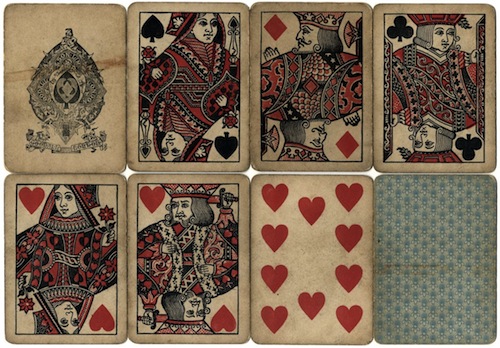
“Word arrived on 11/26 that somebody in No. 5 tent had unearthed a fresh deck of playing cards. Along with McIlroy, [Shackleton] spent hours teaching them how to play bridge. Within forty-eight hours, the popularity of the game reached epidemic proportions.”

— Alfred Lansing, Endurance

“From each tent may be heard, ‘1 club, 2 hearts, 2 no-trump, double 2 no-trump’ etc.”

— Lionel Greenstreet

[image from The World of Playing Cards]

Posted in Images, Other Voices | Comments Off on “Epidemic proportions”

Naming of the boats

The Dudley Docker

The Dudley Docker

“Crews have been allotted to the three boats, which have been christened the James Caird, the Dudley Docker and the Stancombe Wills, and a list of responsible duties drawn up to be performed by individuals in case of emergency. Since the 21st, a northward advance of 20 miles has been made… Little change has taken place in the ice. The present camp has been named Ocean Camp.”

— Frank Hurley

“George Marston, the artist, got busy with what remained of his paints and lettered the proper name on each boat.”

— Alfred Lansing, Endurance

Posted in Images, Other Voices | Comments Off on Naming of the boats

Penguin-skinning

camp_shackandhurley

Shackleton, with Hurley skinning a penguin.

Posted in Images | Comments Off on Penguin-skinning

“She’s going, boys.”

Break-up of the Endurance: Frank Hurley’s 1915 footage, plus new animation. Directed by Sarah Galloway for @AMNH

“Hurley meanwhile had rigged his kinematograph-camera and was getting pictures of the Endurance in her death-throes. While he was engaged thus, the ice, driving against the standing rigging and the fore-, main- and mizzen-masts, snapped the shrouds. The foretop and topgallant-mast came down with a run and hung in wreckage on the fore-mast, with the fore-yard vertical. The main-mast followed immediately, snapping off about 10 ft. above the main deck. The crow’s-nest fell within 10 ft. of where Hurley stood turning the handle of his camera, but he did not stop the machine, and so secured a unique, though sad, picture.

“At 5pm she went down by the head: the stern the cause of all the trouble was the last to go under water. I cannot write about it.”

— Ernest Shackleton, South

endurance-color
Posted in Images, Shackleton, Video | Comments Off on “She’s going, boys.”

I shot the Albatross

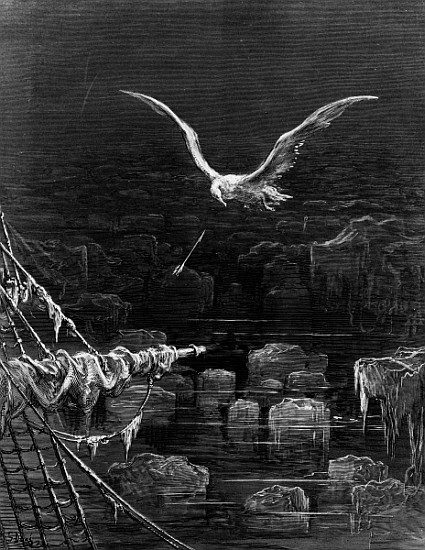
The albatross is shot by the Mariner by Gustave Dore, 1876 (wood engraving)

“The albatross is shot by the Mariner” by Gustave Dore, 1876 (wood engraving)

The Rime of the Ancient Mariner
by Samuel Taylor Coleridge, 1834

[]

And now the STORM-BLAST came, and he
Was tyrannous and strong:
He struck with his o’ertaking wings,
And chased us south along.

With sloping masts and dipping prow,
As who pursued with yell and blow
Still treads the shadow of his foe,
And forward bends his head,
The ship drove fast, loud roared the blast,
And southward aye we fled.

And now there came both mist and snow,
And it grew wondrous cold:
And ice, mast-high, came floating by,
As green as emerald.

And through the drifts the snowy clifts
Did send a dismal sheen:
Nor shapes of men nor beasts we ken—
The ice was all between.

The ice was here, the ice was there,
The ice was all around:
It cracked and growled, and roared and howled,
Like noises in a swound!

At length did cross an Albatross,
Thorough the fog it came;
As if it had been a Christian soul,
We hailed it in God’s name.

It ate the food it ne’er had eat,
And round and round it flew.
The ice did split with a thunder-fit;
The helmsman steered us through!

And a good south wind sprung up behind;
The Albatross did follow,
And every day, for food or play,
Came to the mariner’s hollo!

In mist or cloud, on mast or shroud,
It perched for vespers nine;
Whiles all the night, through fog-smoke white,
Glimmered the white Moon-shine.’

‘God save thee, ancient Mariner!
From the fiends, that plague thee thus!—
Why look’st thou so?’—With my cross-bow
I shot the ALBATROSS.

[]

Full text.

Posted in Other Voices | Comments Off on I shot the Albatross

The Encyclopedia Britannica

Eleventh Edition, 1911

Eleventh Edition, 1911

“For descriptions of every American town that ever has been, is, or ever will be, and for full and complete biographies of every statesman since the time of George Washington and long before, the Encyclopedia would be hard to beat. Owing to our shortage of matches we have been driven to use it for purposes other than the purely literary ones though; and one genius having discovered that the paper, used for its pages had been impregnated with saltpetre, we can now thoroughly recommend it as a very efficient pipe-lighter.”

— Ernest Shackleton, South

Posted in Images, Shackleton | Comments Off on The Encyclopedia Britannica

A bloody business

“Killing the seal was usually a bloody business. Wild had brought from the ship a revolver, a 12-gauge shotgun, and .33-caliber rifle, but ammunition was limited. As a result, the men killed the seals by hand whenever possible. This involved approaching the animal cautiously, then stunning it across the nose with a ski or a broken oar and cutting its jugular vein so that it bled to death. Sometimes the blood was collected in a vessel to be fed to the dogs, but most often it was allowed to run out into the snow. Another technique was to brain the seal with a pickaxe. But the two surgeons discouraged this practice, for it often left the brains inedible and they were prized as food because they were believed to be high in vitamin content.”

— Alfred Lansing, Endurance

Posted in Other Voices | Comments Off on A bloody business